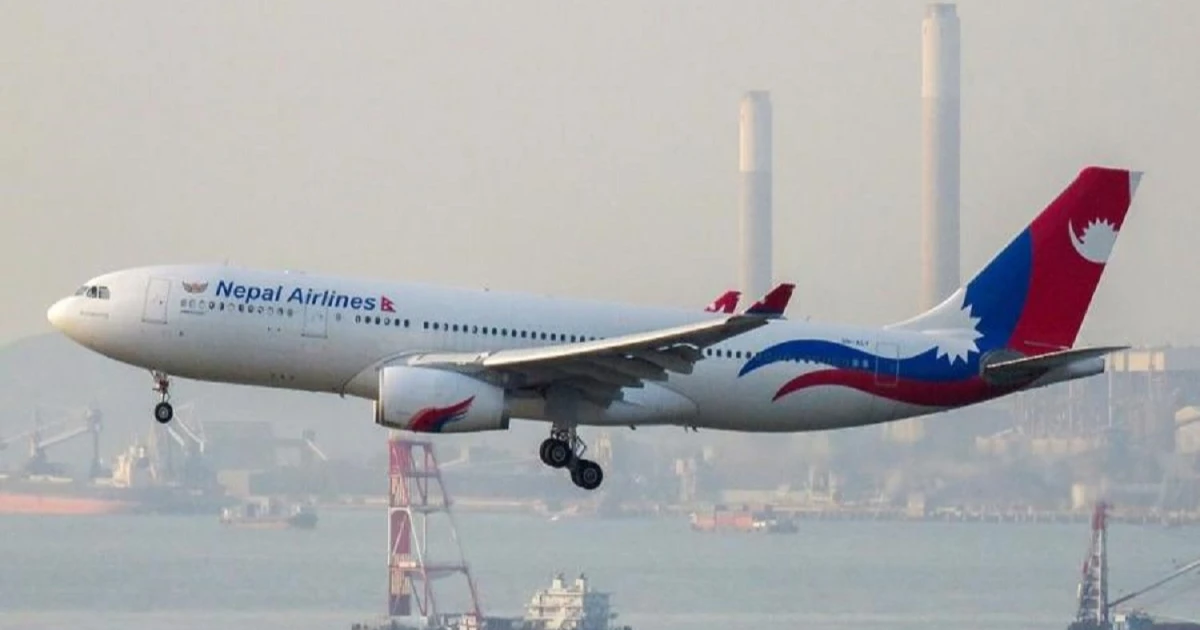
There is a particular kind of morning that has become familiar to travellers this spring. You open your email, or your airline's app, and the notification is already waiting. Your flight has been cancelled. The route you booked months ago, the one that swept down through Dubai or Doha or Abu Dhabi before turning east toward the Himalayas, no longer exists. At least not today.
We understand what that moment feels like. At Hiking Nepal, we have spent decades watching the world find its way to these mountains, through monsoons and earthquakes and pandemics and now this: a crisis in the Middle East that has shuttered Gulf airspace and, with it, the favoured routing of a significant portion of the world's Nepal-bound travellers.
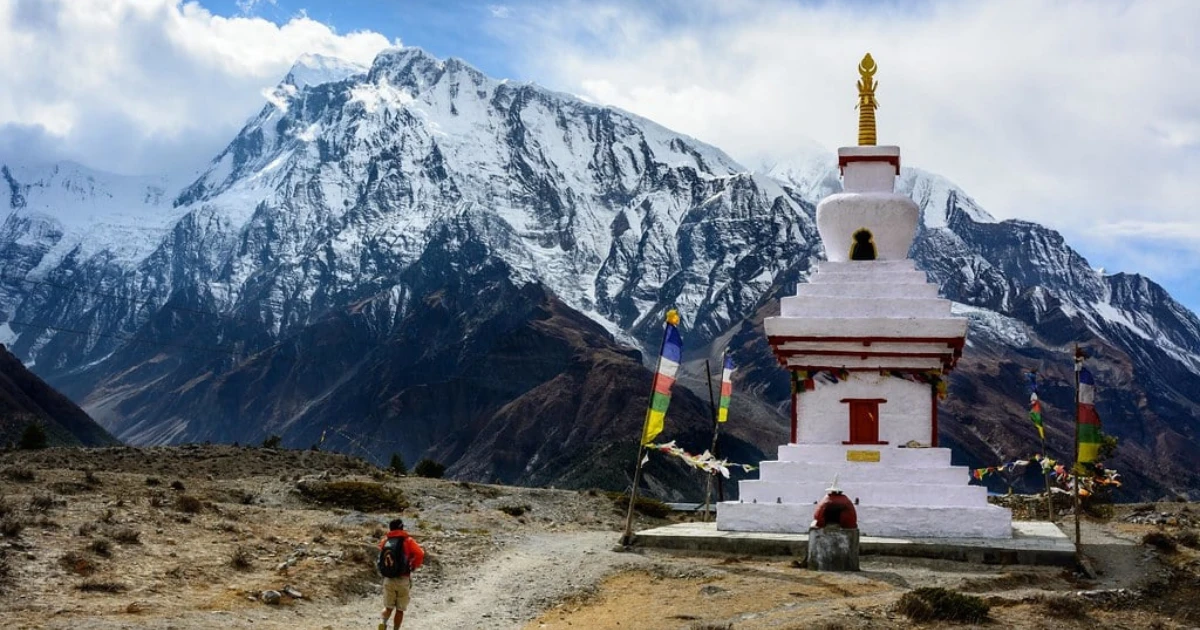
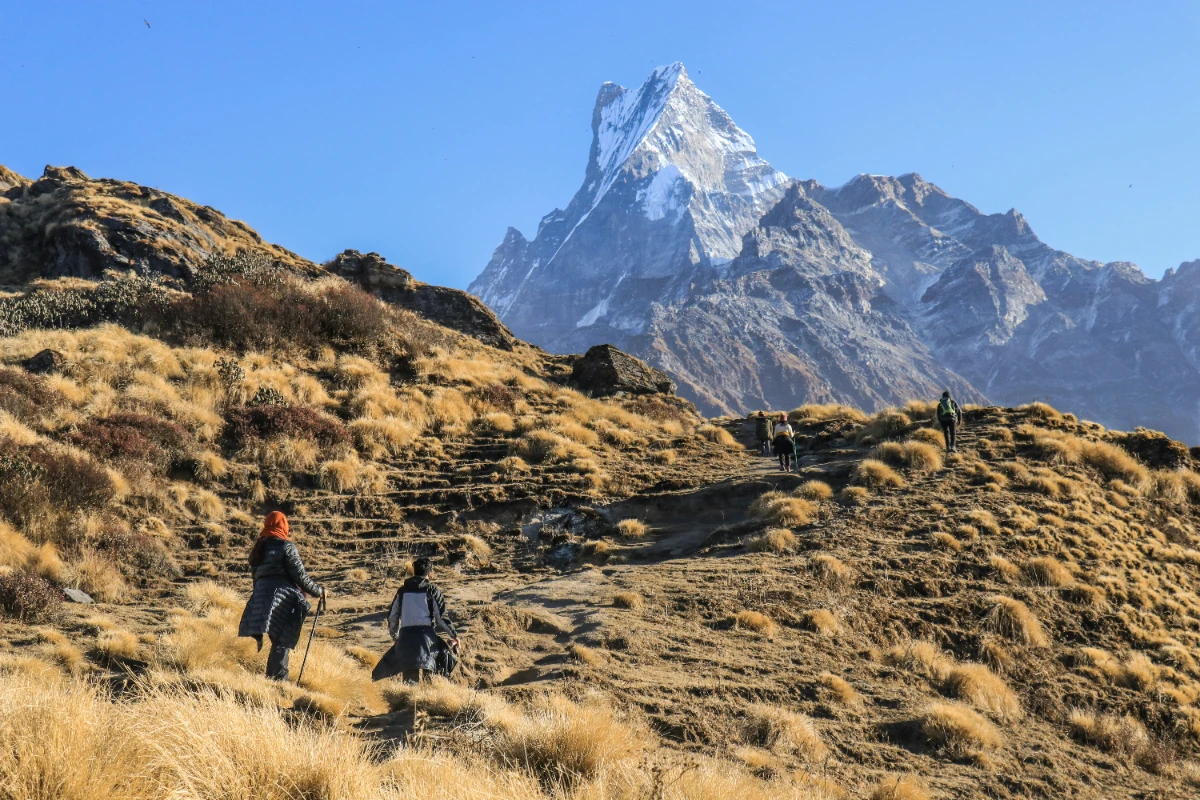
The trails, for what it is worth, remain exactly as they were. The rhododendrons are in bloom. The teahouses are lit. The permit offices are open. Everest has not moved. What has changed is the map between you and all of it, and that is what this guide is for.
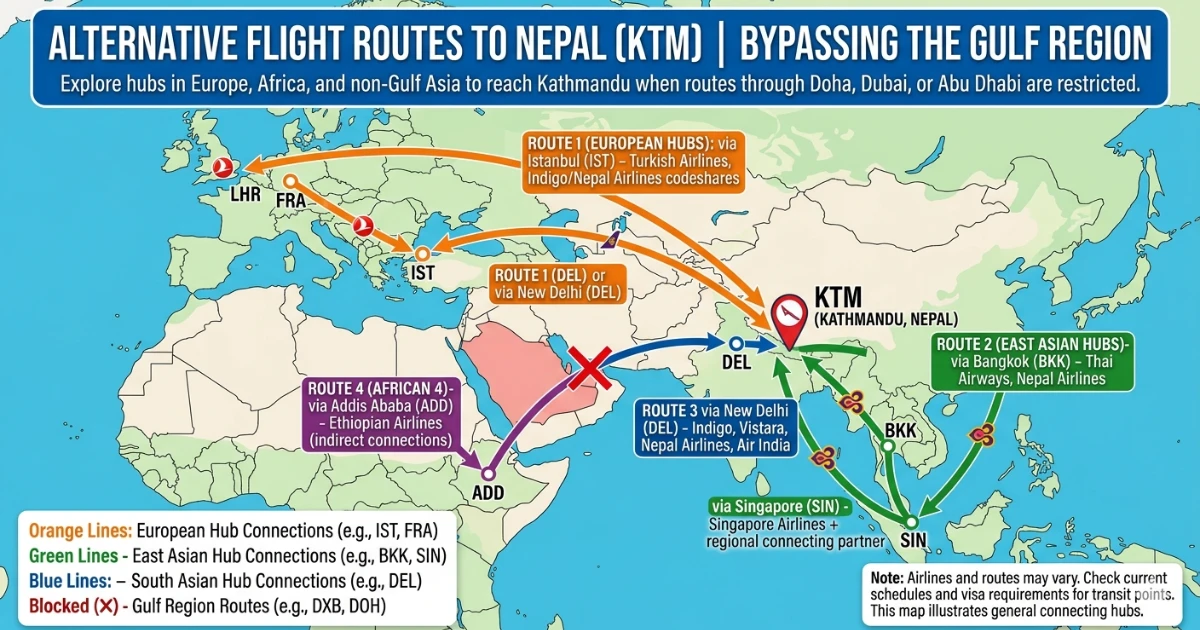
The short answer, for those who need it immediately: yes, you can still get to Nepal. Five viable alternative routing corridors are operating right now, and we are going to walk you through every one of them.
What Has Happened, and Why It Matters for Trekkers
Before the routes, the context. In early 2026, escalating conflict in the Middle East prompted Saudi Arabia, the UAE, Qatar, Kuwait, and Bahrain to close significant portions of their airspace. Around 17 daily flights from Gulf carriers, including Himalaya Airlines, Jazeera Airways, Kuwait Airways, Air Arabia, FlyDubai, Qatar Airways, and Nepal Airlines, were cancelled from Kathmandu almost overnight, with Dubai International Airport closed to all flights from mid-March.
The scale of disruption is significant. Around 60 percent of international flights to Nepal pass through countries whose airspace is currently closed. Hotel occupancy in Thamel dropped from 90 percent to below 50 percent, with online booking cancellations reaching more than 70 percent.
These are real numbers. We are not going to minimise them.
But here is the number that matters most to anyone reading this with trekking boots in the corner and a leave date circled on a calendar: the disruption is concentrated almost entirely in the European market, which relied overwhelmingly on Gulf hub connections. For travellers from India, the US East Coast, Australia, Malaysia, and East Asia, the routes have not changed at all. Those willing to reroute via Turkey, Singapore, Hong Kong, or Seoul are proceeding with their treks rather than cancelling outright.
Cancellation is rarely the right answer. Rerouting almost always is.
The Five Alternative Corridors to Kathmandu
Route One: Istanbul and the Turkish Airlines Connection
This is, for European travellers in particular, the single most important piece of practical information in this entire guide.
Turkish Airlines operates six direct flights per week between Istanbul and Kathmandu, with a flight time of approximately seven hours and five minutes. Istanbul Airport is one of the best-connected hubs on earth, with routes reaching across Europe, the Americas, Africa, and Asia. For a traveller in London, Paris, Frankfurt, Amsterdam, or any other major European city, the pivot from a Dubai connection to an Istanbul connection is, in practical terms, straightforward.
What this means in practice is this: fly into Istanbul, connect to the daily Turkish Airlines service to Tribhuvan International, and you are in Kathmandu with a total journey time that is, in most cases, comparable to the Gulf routing you lost. The Istanbul hub is efficient, modern, and far less congested than it was during the Gulf carriers' period of dominance. Turkish Airlines operates flights TK726 and TK728 on this route, departing between 01:20 and 20:25 depending on the day, giving travellers genuine flexibility over arrival timing into Kathmandu.
For the Himalayan traveller, there is a quiet pleasure in approaching Nepal via Anatolia. Istanbul is a city of minarets and Bosphorus crossings, of spiced air and the call to prayer drifting over ancient rooftops. As pivot points between the disrupted world and the mountains go, it is not the worst place to spend a night.
The practical summary: Turkish Airlines, six times weekly, Istanbul to Kathmandu, approximately seven hours. Book directly through Turkish Airlines or via your travel agent. Star Alliance frequent flyer miles apply.
Route Two: Singapore and the South-East Asian Pivot
The second corridor requires a longer eastward arc, but it is perhaps the most seamless of all the alternatives in terms of connection quality.
Singapore Airlines operates daily direct flights from Singapore to Kathmandu, with a flight time of approximately five hours and ten minutes. Singapore's Changi Airport is consistently rated among the finest in the world: a model of efficiency, comfort, and connectivity. From Changi, networks extend outward to Europe (via multiple daily services), Australia, the Americas, and throughout South-East Asia. For an Australian trekker, a Southeast Asian traveller, or a European willing to make the eastward pivot, Singapore is an extraordinarily capable hub.
There are seven Singapore Airlines direct flights per week operating on the Singapore to Kathmandu route. Combined with connecting options via Thai Airways from Bangkok, Malaysia Airlines and Batik Air from Kuala Lumpur, and numerous other South-East Asian carriers, the frequency of service into Kathmandu via this corridor is, in aggregate, greater than many travellers realise.
Bangkok deserves particular mention. Thai Airways connects multiple European and global cities to Bangkok, from where connecting services to Kathmandu operate regularly. For a traveller whose original itinerary was Dubai, a Bangkok connection adds time but offers the bonus of arriving in Nepal via a part of the world that has its own particular beauty.
The practical summary: Singapore Airlines flies daily direct from Singapore (five hours, ten minutes). Thai Airways via Bangkok, Malaysia Airlines and Batik Air via Kuala Lumpur. All routes are operating normally.
Route Three: Seoul and the Korean Air Lifeline
This is the route that has perhaps surprised the most travellers: Korea has quietly become one of the most reliable gateways to the Himalayas.
Korean Air operates two direct flights per week from Seoul Incheon to Kathmandu, on Tuesdays and Saturdays. These are the only other non-Gulf, non-Turkish direct services into Nepal from a major hub, and their importance right now is difficult to overstate. Seoul Incheon is one of Asia's premier transit airports, with connections arriving from North America, Europe, and across Asia. The twice-weekly direct service means that a traveller transiting Seoul can plan their week around the Tuesday or Saturday departure and arrive in Kathmandu without any further connection.
For travellers from the United States, Canada, and Japan in particular, Seoul offers a natural waypoint. North American travellers who might previously have routed via the Gulf can instead cross the Pacific to Seoul and connect directly. The routing adds geographic distance but loses very little in total journey time, and Korean Air's service quality is consistently high.
Beyond Korean Air's direct service, Thai Airways, Cathay Pacific, Air India, and Singapore Airlines all offer connecting services from Seoul to Kathmandu, providing over 70 weekly options for those willing to accept one connection.
The practical summary: Korean Air direct, Tuesdays and Saturdays, Seoul Incheon to Kathmandu. Multiple connecting options via Cathay Pacific, Thai, Singapore Airlines from Incheon. Ideal for North American and Japanese travellers.
Route Four: Hong Kong and the China Corridor
The fourth corridor is the eastern one, and it operates through a hub that many Western trekkers have historically underused.
Cathay Pacific connects Hong Kong to Kathmandu with a schedule that, combined with its extensive global network, makes Hong Kong a genuinely competitive alternative gateway. Cathay Pacific operates to Kathmandu on a fleet that includes Boeing 777s, Airbus A330s, and A350s. The airline's connections from London, Manchester, Sydney, Melbourne, Toronto, Los Angeles, and New York mean that a Hong Kong routing is available to a very broad range of travellers.
Beyond Cathay Pacific, the Chinese carriers — Air China, China Eastern, and China Southern — all serve Kathmandu via their respective hubs in Beijing, Shanghai, and Guangzhou. These routes were already operating before the Gulf crisis and continue to do so. For travellers who are comfortable with a Chinese hub connection, the frequency of service is considerable.
One note worth making: Chinese carriers operate under their own booking ecosystems, and seat availability, baggage policies, and transit visa requirements vary by nationality. We recommend confirming transit requirements before booking if you hold a passport that requires a visa to transit China.
The practical summary: Cathay Pacific via Hong Kong, multiple weekly services. Air China via Beijing, China Eastern via Shanghai, China Southern via Guangzhou. Broad global connectivity but check transit visa requirements for your nationality.
Route Five: Delhi and the Fastest Connection of All
This fifth route deserves to be at the top of the list for one simple reason: it is the fastest, the cheapest, and the most frequently operated of all the alternatives.
As of March 2026, 15 flights operate daily from New Delhi to Kathmandu, totalling over 107 weekly services. The journey takes approximately one hour and forty minutes. Delhi is connected to virtually every major city in the world. The pivot from a Gulf connection to a Delhi connection is, for many travellers, simply a matter of changing the second leg of their itinerary.
Air India alone connects Delhi to Kathmandu with six daily flights. Air India operates around 45 direct flights from Delhi to Kathmandu every week, with IndiGo adding a further 21 direct weekly services and SpiceJet contributing seven. The sheer volume of capacity on this corridor means that even with increased demand from rerouting travellers, seats are available. Fares on the Delhi to Kathmandu sector have historically been among the most affordable in the region.
For travellers arriving into Delhi from Europe on British Airways, Virgin Atlantic, Air India's long-haul services, or any number of other carriers, the connection to Kathmandu can often be made on the same day. Delhi's Indira Gandhi International Airport, for all its scale, processes international-to-domestic connections efficiently. A morning arrival from London can comfortably make an afternoon departure to Kathmandu.
The practical summary: The most connected option. 15 daily flights, Air India (45 weekly), IndiGo (21 weekly), SpiceJet (7 weekly). From Delhi to Kathmandu: 1 hour 40 minutes. Book your long-haul flight into Delhi and add the Kathmandu sector separately.
The Quick-Reference Routing Table
For those who need the essential information in a single glance:
Hub | Airline | Frequency | Flight Time to KTM | Best For |
| Istanbul (IST) | Turkish Airlines | 6x weekly | 7h 05m direct | European travellers |
| Singapore (SIN) | Singapore Airlines | 7x weekly | 5h 10m direct | Australians, South-East Asia |
| Bangkok (BKK) | Thai Airways | Multiple weekly | ~4h direct | Regional and European connection |
| Seoul (ICN) | Korean Air | 2x weekly direct | ~6h direct | North Americans, Japanese |
| Hong Kong (HKG) | Cathay Pacific | Multiple weekly | ~5h | Global via HKG |
| Delhi (DEL) | Air India / IndiGo | 15+ daily | 1h 40m direct | Everyone — highest frequency |
| Kuala Lumpur (KUL) | Malaysia Airlines / Batik Air | Multiple weekly | ~4h | Australians, South-East Asia |
Nepal's Three Airports: A Hidden Advantage
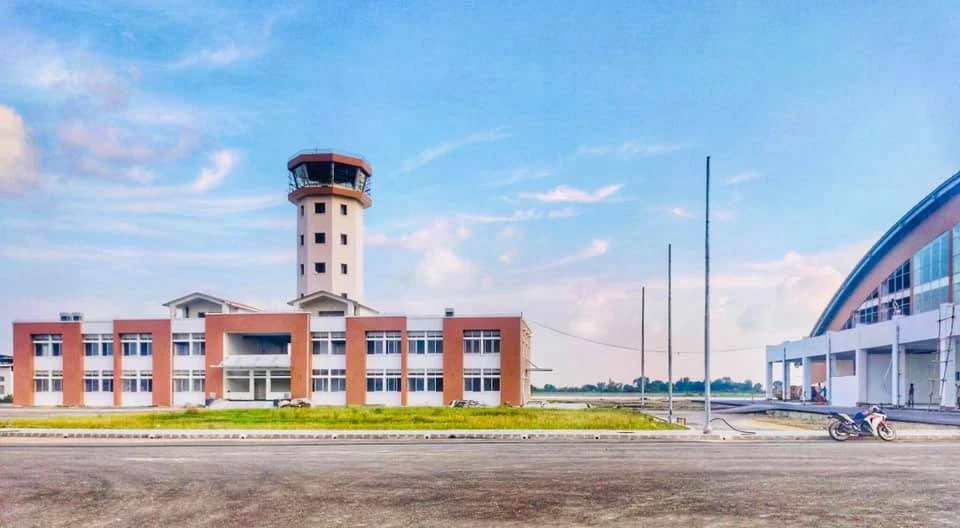
Most travellers who visit Nepal think of a single gateway: Tribhuvan International Airport in Kathmandu. What is less commonly known, and what may be genuinely useful in the current disruption, is that Nepal now has three international airports.
Nepal has three operational international airports as of 2026: Tribhuvan International Airport in Kathmandu, Gautam Buddha International Airport in Bhairahawa, and Pokhara International Airport in Pokhara. This expansion from Nepal's sole historical gateway is beginning to transform how international travellers access the Himalayas, reducing congestion and offering strategic entry points for trekking regions.
Pokhara International Airport (PRIA) is the Annapurna trekker's argument for bypassing Kathmandu entirely. The Annapurna Range, with three of the world's ten highest peaks, is within 15 to 35 miles of Pokhara Valley. An international arrival at Pokhara puts you within two hours of your trek starting point, compared with a full day's logistics from Kathmandu. The Government of Nepal has introduced concessions including waived service fees, ground handling charges, and fifth freedom rights to attract international airlines to Pokhara until mid-September 2026. Druk Air and Air Astra are among the carriers set to begin PRIA services. We recommend checking current schedules as this situation develops rapidly.
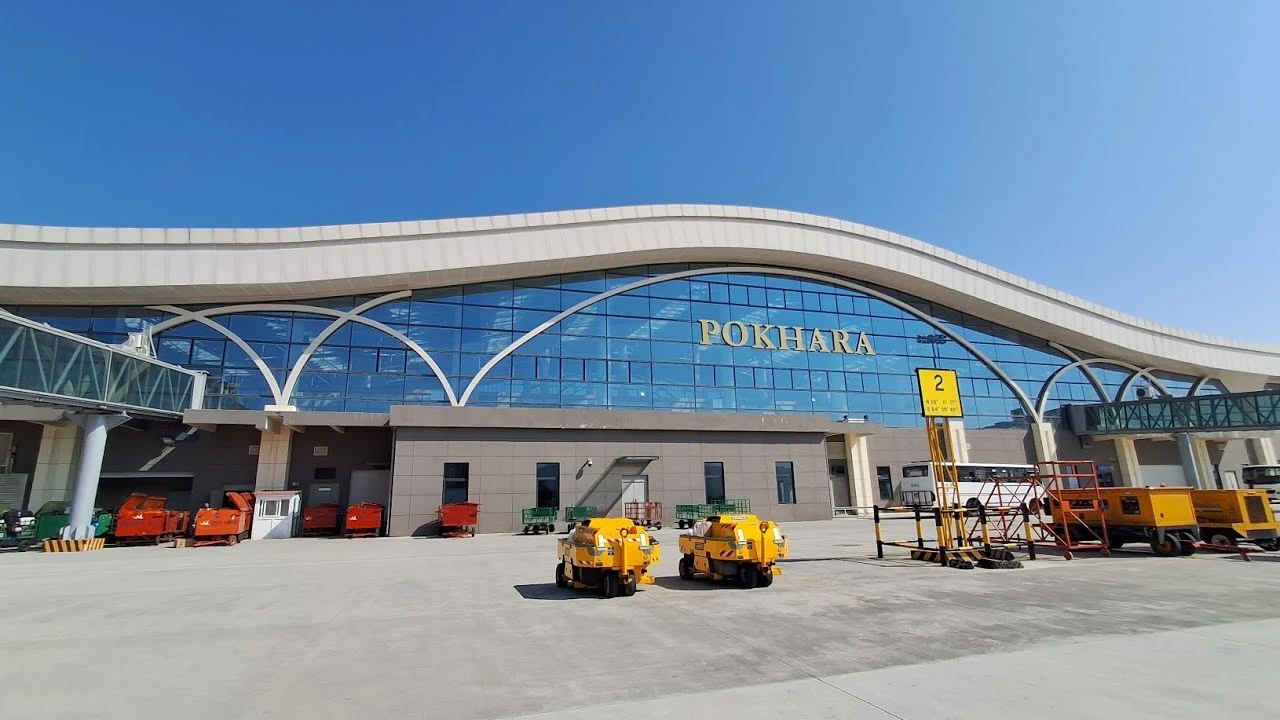
Gautam Buddha International Airport (GBIA) at Bhairahawa serves the Lumbini region and lower Mustang access points. Himalaya Airlines, Jazeera Airways, Wizz Air, Air Arabia, and Thai AirAsia are among the airlines set to launch or resume operations at GBIA under the new incentive framework. For travellers whose itinerary includes cultural sites in the Lumbini region or who are approaching Mustang from the south, this airport deserves consideration.
The honest caveat: both Pokhara and Bhairahawa remain airports in development for international services. We recommend verifying specific routes and schedules before incorporating them into your booking. Our team monitors these developments daily and can advise on current availability
Origin-Specific Guidance: Where Are You Flying From?
From the United Kingdom
Your best options right now are Turkish Airlines via Istanbul, and Air India or British Airways into Delhi with a same-day connection to Kathmandu. The Istanbul routing is the most direct alternative to your lost Gulf connection. Delhi adds a stop but provides far greater frequency and, in many cases, lower fares. Consider flying into Delhi a day early if your schedule permits, and treat it as the beginning of your journey rather than a logistical obstacle.
From the United States and Canada
The Seoul corridor via Korean Air's twice-weekly direct service is your cleanest alternative. For the East Coast, crossing the Atlantic to Istanbul and connecting to the Turkish Airlines direct service is also viable. West Coast travellers have the Pacific crossing to Seoul or Tokyo and onwards to Kathmandu as a natural routing. The Delhi connection works well for all North American travellers willing to add an Asian hub.
From Australia and New Zealand
Singapore is your hub. Singapore Airlines operates daily direct services from Singapore to Kathmandu, seven times per week. From Sydney, Melbourne, Brisbane, or Perth, Singapore is already a familiar transit point. Connect onward to Kathmandu and your total journey time is entirely manageable. Kuala Lumpur via Malaysia Airlines is a strong secondary option.
From Europe (Excluding UK)
Turkish Airlines via Istanbul is the answer. The frequency of European cities connected to Istanbul Airport is extraordinary, and the direct Istanbul to Kathmandu service operates six times weekly. For Western European travellers, this is the most seamless replacement for the lost Gulf routing.
From East and South-East Asia
You are, in most cases, the least affected group. Delhi, Singapore, Bangkok, Kuala Lumpur, Seoul, and Hong Kong all connect to Kathmandu with high frequency and no Gulf dependency whatsoever. Check your preferred hub carrier's schedules and proceed.
My Flight Was Cancelled: What to Do Right Now
If you are reading this because a cancellation notification arrived this morning, here is the sequence of actions that serves you best:
The first thing to do is not panic. The cancellation of a Gulf routing is not the cancellation of your trek. It is a change of route, and routes, as we have just demonstrated, exist.
Contact your airline before contacting anyone else. Most carriers operating Middle East routes are offering fee-free rebooking to alternative routings in light of the airspace closure. Ask specifically about the Istanbul, Singapore, or Delhi alternatives. If your airline cannot rebook you without penalty, your travel insurance policy's "force majeure" clause should cover the rerouting costs. Check your policy documents.
If you booked with us at Hiking Nepal, call our operations team directly at +977 9802342080. We have been on the ground in Kathmandu throughout this disruption, monitoring every development in real time. We know which routes are operating, which teahouses have availability on rerouted arrival days, and how to adjust your Kathmandu arrival logistics if your landing time or airport changes. This is exactly what a local partner is for.
Build one extra day into your Kathmandu arrival if you possibly can. Rerouted itineraries carry a slightly higher risk of connection delays than your original routing. A buffer day in Kathmandu is not wasted time: the Boudhanath Stupa, the Pashupatinath ghats, and the back lanes of Thamel are all worth a morning. You can attend to permit formalities and use the afternoon to acclimatise gently to the altitude differential from sea level. Your trek begins better from a state of arrival than from a state of transit.
The Cost Question: Are Fares Going Up?
The honest answer is: yes, on some routes, and temporarily. Economy-class fares on some Europe to Kathmandu routes have nearly doubled as demand concentrates onto the remaining available corridors.
But not all routes are affected equally. The Delhi corridor, which carries the highest raw capacity of any Nepal route, has absorbed increased demand without significant fare spikes. The Singapore corridor is seeing modest increases but remains competitive. Istanbul fares have risen, though the route's directness and the absence of a second connection mitigate this somewhat.
Our practical recommendations: book immediately if you have not already, as fares on the alternative routes will continue to rise as the disruption extends. Consider flying into Delhi and booking the Delhi to Kathmandu sector separately from your long-haul flight, as this unbundled approach often yields better overall pricing. Use Google Flights' price alert function for your specific routing and set the threshold at which you would book without hesitation.
What we can say with some confidence is this: the cost of a rerouted flight, even at current elevated prices, is considerably less than the cost of cancelling and rebooking an entire trek in a future season.
What About Travel Insurance?
This is a question we are fielding every day, and the answer depends significantly on your specific policy.
Most comprehensive travel insurance policies include coverage for "disruption caused by events outside the traveller's control." A geopolitical event causing airspace closure is, in the vast majority of policies we have seen, covered under this category. It typically covers reasonable additional costs for rerouting, accommodation during delays, and alternative transport.
What it may not cover is the difference in fare if you choose to rebook onto a significantly more expensive routing when an equivalent alternative was available. Document every step of your rerouting process: screenshots of the original cancellation, evidence of the routing alternatives you investigated, and receipts for any additional costs incurred. This documentation is what turns a claim from a negotiation into a straightforward reimbursement.
We recommend calling your insurer before making any booking decisions. State clearly that your original routing was cancelled due to the Middle East airspace closure and ask specifically what costs are covered for rerouting. A ten-minute phone call at this stage can save a significant sum later.
Should You Postpone, or Proceed?
We are asked this constantly, and our answer is consistent: proceed with proper planning.
The spring trekking season is among the finest in the Himalayan calendar. The skies are clear, the rhododendrons are blooming from the lower forests all the way up toward the treeline, and the trails carry a quality of light in March and April that photographers have been trying to capture for generations without fully succeeding.
The trails are open. The guides and porters, who depend on this season's income to sustain their families through the months that follow, are ready and waiting. The teahouses are stocked. The permits are being issued at every checkpoint. The biometric tracking systems are operational. The helicopter evacuation network is in place.
The only thing that has changed is the route to get there. And routes, as we have hopefully demonstrated, can be navigated.
The mountains are not waiting for the Middle East crisis to resolve. They do not have that kind of patience, or that kind of concern for geopolitics. They are simply there, as they have always been: asking nothing of you except the willingness to make the journey.
The Deeper Truth About Getting There
There is something worth saying that sits beneath all the flight schedules and hub comparisons and fare alerts.
Every traveller who has made it to the Himalayas has a story about the journey. The stories are rarely about the flight that went perfectly. They are about the delay in Doha that led to a conversation with a Sherpa on his way home. About the missed connection in Bangkok that was filled with an hour of watching monks cross a temple courtyard. About arriving, finally, into Kathmandu's Tribhuvan Airport at dawn, after something longer and more circuitous than planned, and stepping out into air that smells of incense and altitude and the particular freshness of a city at the foot of the world's highest range.
The detour, in our experience, is often the beginning of the journey rather than an interruption to it. Istanbul for a night. Singapore for a morning. Delhi for a day. These are not obstacles between you and Nepal. They are the opening movements of something that the mountains will complete.
We have been guiding travellers to these hills for long enough to know that the ones who make it through the complications always, without exception, feel that the journey was worth it. The ones who cancel rarely feel that the timing was right to stay home.
Book your rerouted flight. Pack your boots. The trails are waiting.
What Your Action Plan can be
For those who want the essential steps without the prose:
If your flight was just cancelled: contact your airline immediately and request fee-free rebooking onto an alternative routing. Simultaneously, contact your travel insurer and document everything.
If you are planning a spring 2026 trek and have not yet booked flights: use the routing table above to identify your best corridor. Book immediately. Fares will not fall.
If you are booked on a trek with us: call our operations team. We will advise you on the best current routing for your origin city and adjust your Kathmandu logistics accordingly.
If you are considering postponing: our strong recommendation is to proceed. The season is exceptional, the trails are fully operational, and the disruption is logistical rather than safety-related.
Nepal is there. The way to it still exists. We have just mapped it for you.
Frequently Asked Questions
Can I still fly to Nepal if my Gulf connection was cancelled?
Yes. Five alternative routing corridors are fully operational: Istanbul via Turkish Airlines, Singapore via Singapore Airlines, Seoul via Korean Air, Hong Kong via Cathay Pacific, and Delhi via Air India and IndiGo. Most European travellers can reroute via Istanbul without significant additional journey time.
Which is the fastest alternative route to Kathmandu right now?
Delhi is the fastest connection. Air India, IndiGo, and SpiceJet together operate over 107 weekly services between Delhi and Kathmandu, with a flight time of approximately one hour and forty minutes. If your long-haul airline connects to Delhi, this is your most efficient option.
Has the cost of flying to Nepal increased because of the Gulf airspace closure?
On some routes, yes. European routes in particular have seen fare increases as demand concentrates onto the Istanbul and Delhi corridors. The Delhi corridor has the most capacity and has seen the smallest fare increases. Book immediately, as fares are likely to continue rising while the disruption continues.
Is my travel insurance likely to cover the cost of rerouting?
Most comprehensive travel insurance policies cover rerouting costs caused by geopolitical events outside the traveller's control. Contact your insurer before making any new bookings and document the original cancellation and all alternative options you investigated.
Are the trekking trails in Nepal affected by the Middle East crisis?
Not at all. The Everest, Annapurna, Mustang, and Langtang regions are fully operational. Permits are being issued, teahouses are open, and guides and porters are working normally. The disruption is entirely one of international aviation routing, not of conditions on the ground in Nepal.
At Hiking Nepal, our operations team is monitoring the aviation situation in real time throughout the 2026 spring season. If your routing has been affected and you are uncertain how to proceed, please reach out to us directly. We are here not only to plan treks but to help travellers navigate the world between their front door and the mountain.