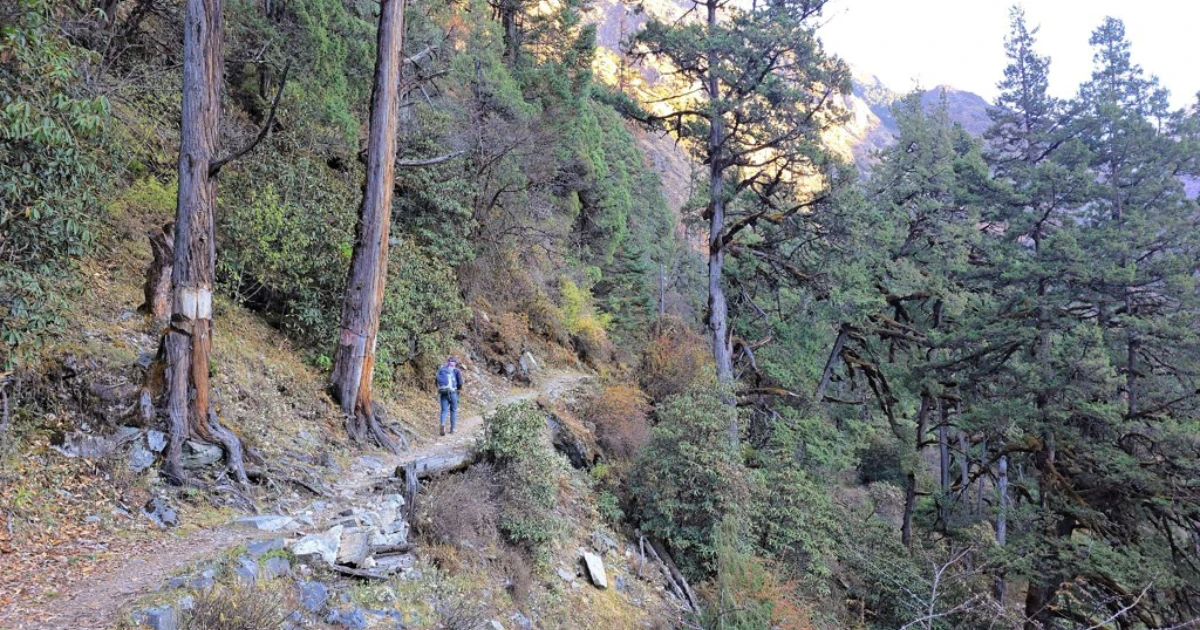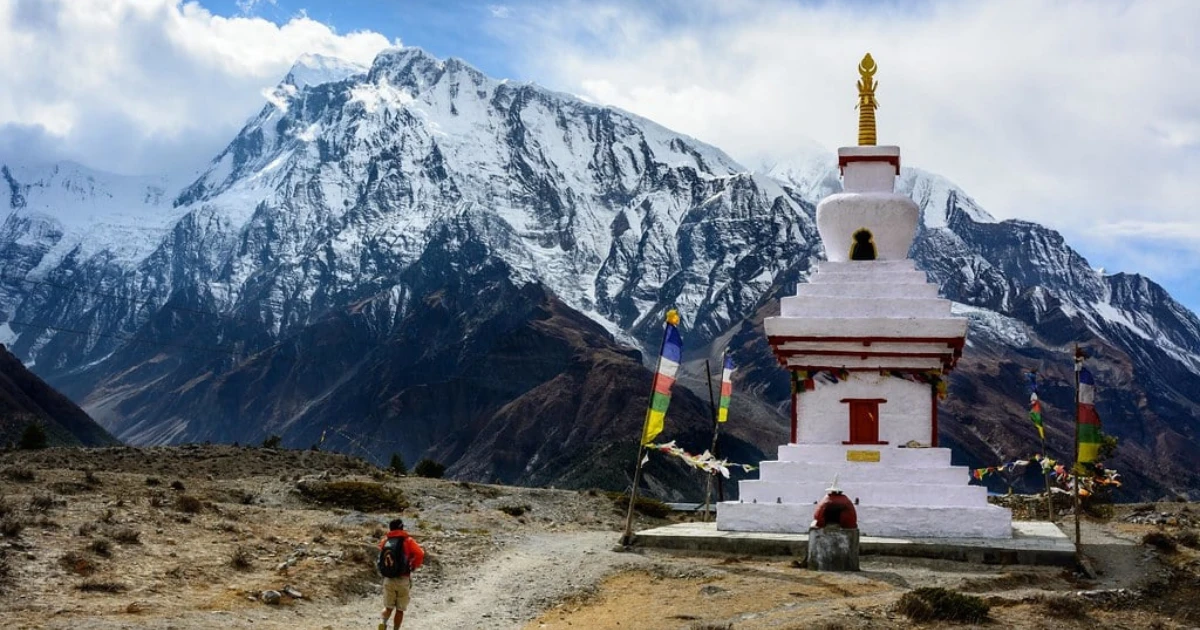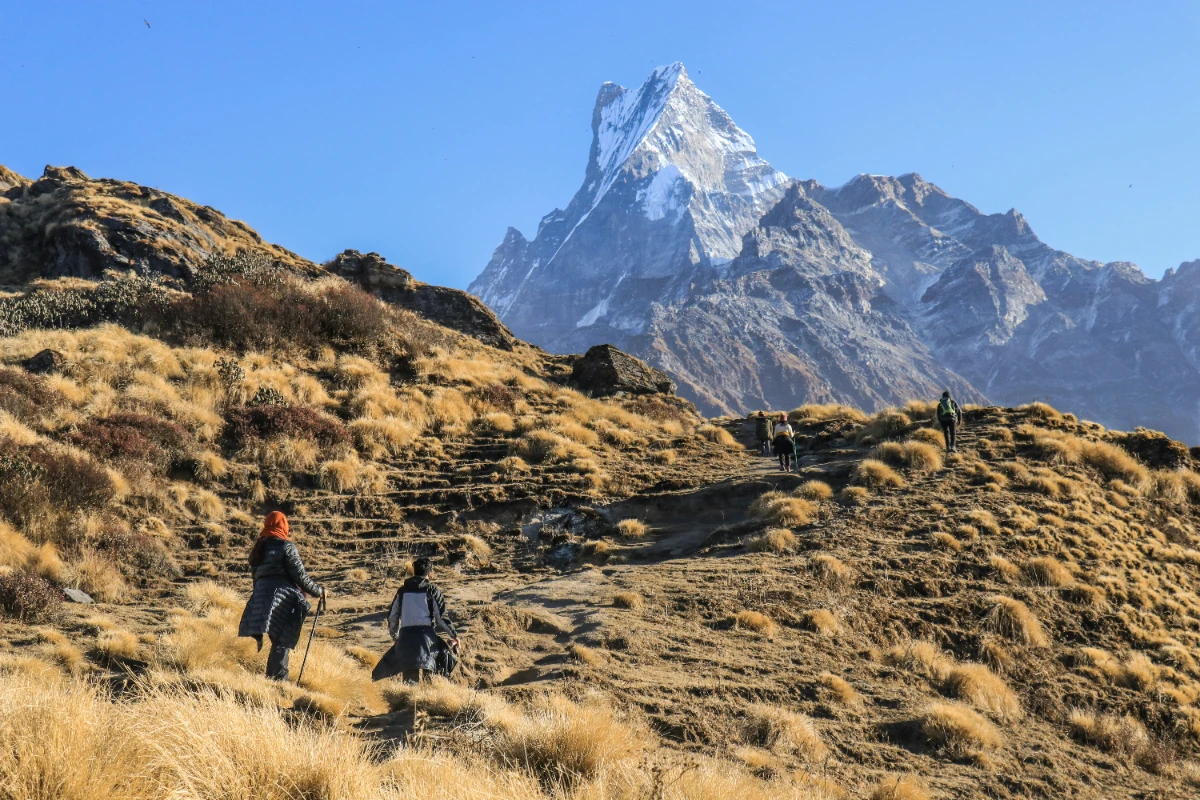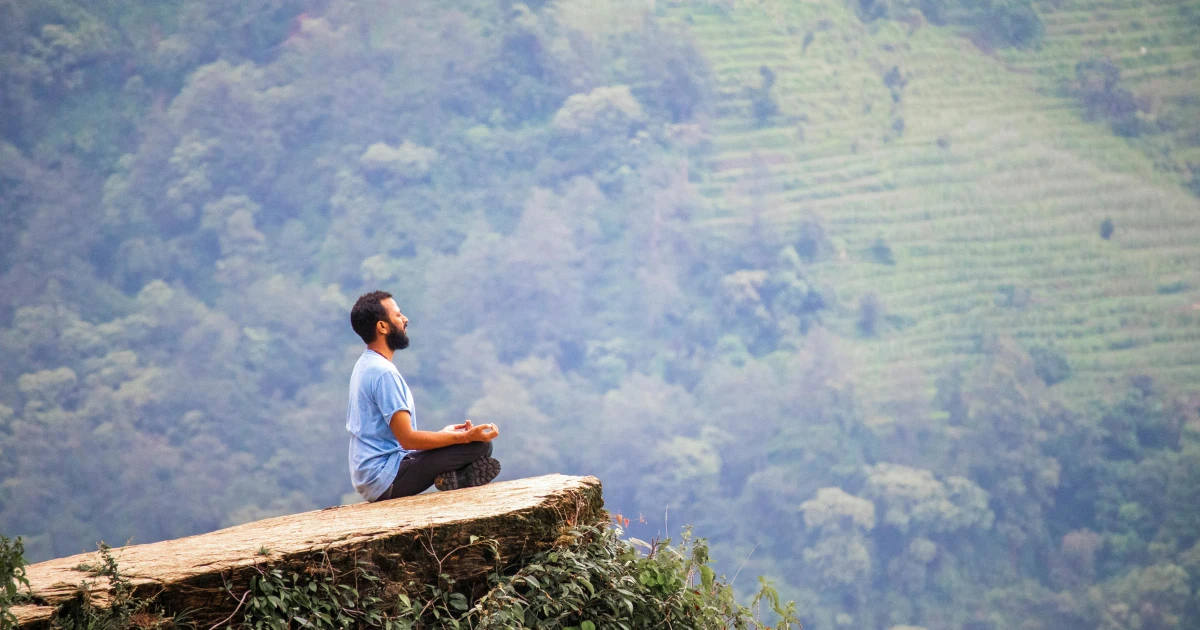
There is a particular kind of question that arrives in our inbox every season, and it never quite changes in its shape, only in its urgency. Is it safe? The sender is usually somewhere warm and landlocked, a desk in Cincinnati, a flat in Manchester, a café in Melbourne, and they are looking at a photograph of a trail winding toward a white ridge, and they are feeling the particular pull that photographs of trails winding toward white ridges always produce. And then, in the same moment, they are reading the news. And the news, as it always does, is doing what news does best: filling the distance between here and there with shadow.
In 2026, the question has a new qualifier. Is Nepal safe after the election?
It is a fair question. It deserves a real answer, not a reassurance, but an honest reckoning with what the Himalayas are, what they have always been, and what, if anything, has changed.
The Short Answer, for Those Who Need It
Yes. Nepal is safe to travel in 2026. The trekking regions, the Khumbu, the Annapurna, Upper Mustang, Langtang, are open, operating, and welcoming travellers with the same unhurried hospitality that has defined these hills for centuries. The election has concluded. The trails have not been noticed.
But the longer answer is the more interesting one, and it is the one that will actually serve you.
What the Mountains Don't Do
The Himalayas, it must be said, have never been particularly interested in politics.
They existed before the first dynasty rose on the plains below them. They will exist long after the last parliament is dissolved. The rhododendrons along the Annapurna Circuit bloomed pink and crimson this spring, as they did last spring, and as they did when no one from the outside world was watching. The yaks on the Khumbu plateau are, to the last animal, indifferent to election results.
This is not a flippant observation. It is, in fact, the most important thing to understand about trekking safety in Nepal: the risks that matter on a mountain trail are almost entirely natural, logistical, and physical. They are the altitude, the weather and the condition of the path. There are the questions of whether your boots fit, whether your lungs are acclimatised and whether your guide knows the difference between a clear horizon and a storm building quietly behind it. Political events in Kathmandu, even significant ones, have historically had almost no effect on the safety of the trails.
We have been guiding trekkers through Nepal for decades. We have operated through constitutional crises, through the transition from monarchy to republic, through governments that rose and fell with the swiftness of a Himalayan weather front. In all of that time, we have never once had to turn a group around because of political instability on the trail.
Nepal's 2026 Election: What Actually Happened
To understand why the post-election period is not, in fact, a reason for alarm, it helps to understand what Nepal's election actually was: a democratic exercise, not a rupture.
Nepal held its general elections in the spring of 2026, continuing the pattern of competitive, multi-party politics that has defined the country since the end of its decade-long civil conflict. The voting was, by international observer standards, broadly credible. There were the usual allegations and counter-allegations of procedural irregularity that attend any close-run democratic contest anywhere on earth. There were rallies, and rhetoric, and the particular theatre of Nepali political life, which has always been vivid and loud and, crucially, largely separate from the life of the hills.
The trekking regions, remote, physically separated from the capital, administered largely through their own local structures and conservation area rules, experienced the election as a background hum, not a disruption. Teahouses stayed open. Permits were issued. The trails remained exactly as they were.
What follows an election in Nepal is a period of coalition-building: the complex, patient arithmetic of parliamentary politics in a country with many parties and many competing interests. This process can be slow. It can be contentious. It can produce newspaper headlines that read, to the uninitiated foreign eye, like signs of instability. They are not. They are the workings of a democracy that has chosen argument over autocracy, and that choice, whatever its daily inconveniences, is not a threat to the trekker making their way toward Thorong La.
The Only Travel Advisories That Actually Matter
Every government issues travel advisories for Nepal. The language is almost always the same: exercise normal safety precautions or, in the cautious phrasing of the Foreign Office, be aware of your surroundings. During and immediately after election periods, some advisories may be briefly upgraded to note the possibility of localised protests or demonstrations.
What these advisories are describing is Kathmandu. Specifically, certain neighbourhoods of Kathmandu where political rallies tend to congregate. They are not describing Namche Bazaar, or the trail from Gorepani to Poon Hill, or the stone teahouses of Manang, where the walls are hung with photographs of every expedition that has passed through since the 1970s.
The practical advice is simple: check your government's advisory before departure. If it says avoid non-essential travel, take it seriously, though this language has not been used for Nepal in any recent election cycle. If it says exercise caution in crowded public areas, note it, and avoid political gatherings during your time in Kathmandu, which will likely be the first and last days of your journey in any case.
Then, lace up your boots and walk toward the mountains.
The Infrastructure of Safety: Nepal's 2026 Trekking Protocols
Here is what many first-time trekkers do not fully appreciate: Nepal has, in recent years, built one of the most sophisticated trekker safety frameworks in the high-altitude world. The election has not disrupted this. If anything, the ongoing investment in tourism infrastructure continues regardless of which coalition holds power in Kathmandu, because tourism is not a partisan issue; it is the economic lifeblood of the hills.
The Digital Live-Trail Pass and Biometric Checkpoints
The era of the paper TIMS card, that small, easily lost booklet that once represented the total of official knowledge of your whereabouts, has ended. Every trekker entering the Annapurna and Everest regions now carries a unique QR code on their smartphone, scanned at biometric checkpoints along the route. The system knows where you are. If a storm closes in or if you fail to appear at an expected checkpoint, the alert goes out.
This is not surveillance. It is a safety net so fine that you would never feel it, unless you needed it.
Mandatory Helicopter Evacuation Insurance
New 2026 regulations require that every trekker upload proof of helicopter evacuation insurance to the digital permit portal before their trek begins. The policy must cover evacuations up to 6,000 metres. This means that if altitude sickness strikes above Dingboche, or a fall happens on a moraine below Lobuche, the question of how to get you down is already answered. The argument about payment happens later, in offices far from the mountain. On the mountain, you are airborne within hours.
This single regulation has, in our view, been the most significant improvement to trekker safety in a generation.
The Green Corridors: Filtered Water and Plastic-Free Trails
Across the Annapurna and Khumbu regions, a strict ban on single-use plastic bottles is now in effect. Every registered teahouse has installed filtered water stations. This is relevant to health as well as the environment: the quality of drinking water available to trekkers in 2026 is categorically better than it was five years ago. Waterborne illness, once a significant factor in trek disruption, has fallen sharply in the areas where filtration is enforced.
Region by Region: The Current Situation
Everest Region (Khumbu)
The trail from Lukla to Everest Base Camp is operating normally. The Lukla-to-Ramechhap flight realignment, now a permanent feature of peak spring and autumn seasons, designed to reduce congestion in Kathmandu's airspace, has been in place long enough that it has ceased to be a source of traveller anxiety and has become simply the way things work. For our senior travellers making this journey, we offer luxury shuttle coaches from Kathmandu to Ramechhap: air-conditioned, comfortable, departing at a civilised hour rather than the midnight scramble of years past.
The biometric checkpoint system is most fully developed here. You will be tracked, gently, at every major waypoint.
Annapurna Region
The circuit and the sanctuary are both fully operational. The NATT routes, Natural Annapurna Trekking Trails, developed in response to road construction in the lower valleys, mean that the experience of walking through living rhododendron forest, through villages where the architecture has not changed in centuries, is still available to those who wish it. Our guides know every road-free alternative. You need never walk alongside a construction site if you do not want to.
The Annapurna Conservation Area checkpoints are fully staffed. The filtered water network is in place. Teahouses are open.
Upper Mustang
The "Forbidden Kingdom" has quietly undergone its most welcome administrative change in years. The flat USD 500 permit fee has been replaced with a per-day model of USD 50, making a four-to-five-day cultural journey to Lo Manthang, the walled city that sits at the end of the Kali Gandaki gorge, watching the centuries pass, genuinely accessible without the commitment of a full ten-day permit. The political changes in Kathmandu have not affected Mustang's operations. The kingdom receives its travellers as it always has: with a silence so complete you can hear your own heartbeat.
Langtang and Gorkha
These quieter regions, Langtang rebuilt after the earthquake, Gorkha still carrying its history gently, are operating without incident. For student groups and educational expeditions, the Pikey Peak and Gorkha circuits offer a safety framework specifically designed for large groups of twenty to thirty participants, with senior mountain leaders, educational programming around navigation and environmental stewardship, and logistics structured for institutional requirements.
For Those Who Ask About Crime
Nepal is, by the standards of global tourism destinations, a low-crime country for trekkers. Violent crime against foreign visitors on trekking routes is vanishingly rare. The risks that do exist, and they should be named, because honesty is more useful than reassurance, are the risks of opportunistic theft in crowded urban areas (Thamel, the bus parks, the airport precincts) and the risks of the trail itself: altitude, weather, physical injury, and the particular vulnerability of those who trek without a qualified guide.
None of these risks is connected to the election. None of them has worsened in 2026. Most of them are mitigated by the same decisions that have always mitigated them: travelling with a reputable organisation, carrying the right insurance, not trekking alone above 3,000 metres, and telling someone who matters exactly where you are going.
Who Is Trekking in 2026?
One of the more interesting things about the 2026 season is not the politics, which are unremarkable, but the people: who is coming to Nepal, and why.
The demographic has expanded in ways that would have surprised an observer from even ten years ago. Senior travellers are arriving in numbers that would once have been unimaginable, drawn by the emergence of what we call Golden Age itineraries, heated lodges, shorter walking days of three to four hours, oxygen-supported trekking in the lower elevations of both the Everest and Annapurna regions. The mountains, it turns out, have no age limit.
Digital nomads are arriving with laptops and expectations of connectivity, and finding that Namche Bazaar and Manang now have Starlink-powered workstations capable of sustaining a video conference at 3,500 metres. You can close the laptop at midday and be sitting beside a glacial lake by afternoon. This is not a metaphor. It is a schedule.
Students are arriving on leadership expeditions, learning to read terrain and manage teams and leave no trace, a generation discovering that the oldest classroom is still the most effective one.
And quietly, increasingly, travellers are arriving without a peak objective at all. They are choosing to stop at monasteries in Khumbu and Langtang, to sit in the courtyards where monks have chanted the same texts for five hundred years, to practice what we have come to call Slow Travel. The internal journey, finally, takes precedence over the external one.
None of this is affected by who holds power in Kathmandu.
The Question Behind the Question
When someone asks, Is Nepal safe after the election?, there is often a second question, unasked and perhaps unformed, somewhere beneath it. It is the question that all travellers carry, all the time, about all destinations: Is it safe to want this? Is it permissible, in a world that is complicated and sometimes frightening, to still want to walk toward a white ridge under a blue sky?
The Himalayas have been answering this question for as long as human beings have been asking it. The answer is yes. Not naively, not without preparation, not without the proper insurance and the qualified guide and the biometric QR code and the evacuation protocol. But yes.
The mountains are there. The trails are open. The teahouses are lit in the evenings, and the filtered water is clean, and somewhere above the clouds, the summit of Everest catches the last light of a day that has passed over everything else already.
The election happened. The democracy held. The mountains were unmoved.
And you, if you are ready, are welcome.
Before You Go: The 2026 Safety Checklist
For those who prefer the concrete to the contemplative, here is what you actually need before you leave:
Permits and Registration
- TIMS digital registration (generates your QR code for biometric checkpoints)
- Applicable Conservation Area or National Park permit for your region
- Upper Mustang: USD 50/day restricted area permit (new per-day model)
Insurance
- Comprehensive travel insurance including helicopter evacuation to 6,000 metres
- Upload proof of heli-evac coverage to the digital permit portal before departure; this is now mandatory, not advisory
Health and Altitude
- Consult your physician about altitude sickness prevention (acetazolamide/Diamox if appropriate)
- Allow proper acclimatisation days; do not attempt to rush the schedule
- Oxygen-supported options are available on our senior and comfort treks
Logistics
- If flying to the Everest region, plan for the Ramechhap departure; we arrange Luxury Shuttle transport from Kathmandu
- Register your itinerary with your embassy or consulate in Kathmandu
- Carry your government's emergency contact number and ours
On the Trail
- Carry a reusable water bottle; single-use plastic is banned in the Annapurna and Khumbu regions; filtered stations are at every registered teahouse
- Your QR code is your check-in and your safeguard; keep your phone charged
- If you are trekking independently above 3,000 metres, please reconsider. A guide is not a luxury here. It is a safety decision.
Emergency Contacts for Nepal Trekkers
- Nepal Police Emergency: 100
- Tourist Police Kathmandu: +977-1-4247041
- TIMS/CAAN Emergency Trekking Hotline: Via digital permit portal
- Himalayan Rescue Association (Kathmandu): +977-1-4440292
- Himalayan Rescue Association (Pheriche Clinic, Everest): Operational October–May
- Hiking Nepal 24-Hour Operations: +977 9802342080
At Hiking Nepal, we have been walking these trails since before the paper maps gave way to satellite coordinates, and before the dusty permit offices became digital portals. We have seen every iteration of Nepal's political life, and we have watched, every time, as the mountains remained exactly themselves. We are here to help you plan a journey that is safe, meaningful, and worthy of the landscape it moves through. Reach out to us, not because you are afraid, but because you are ready.