Forget the air-conditioned studio. Forget the perfectly levelled bamboo floor. Real yoga isn't about control; it is about adapting to the chaos of the elements.
At Hiking Nepal, we have seen the shift. Travellers are no longer just looking to just climb a peak. They want to connect with it.
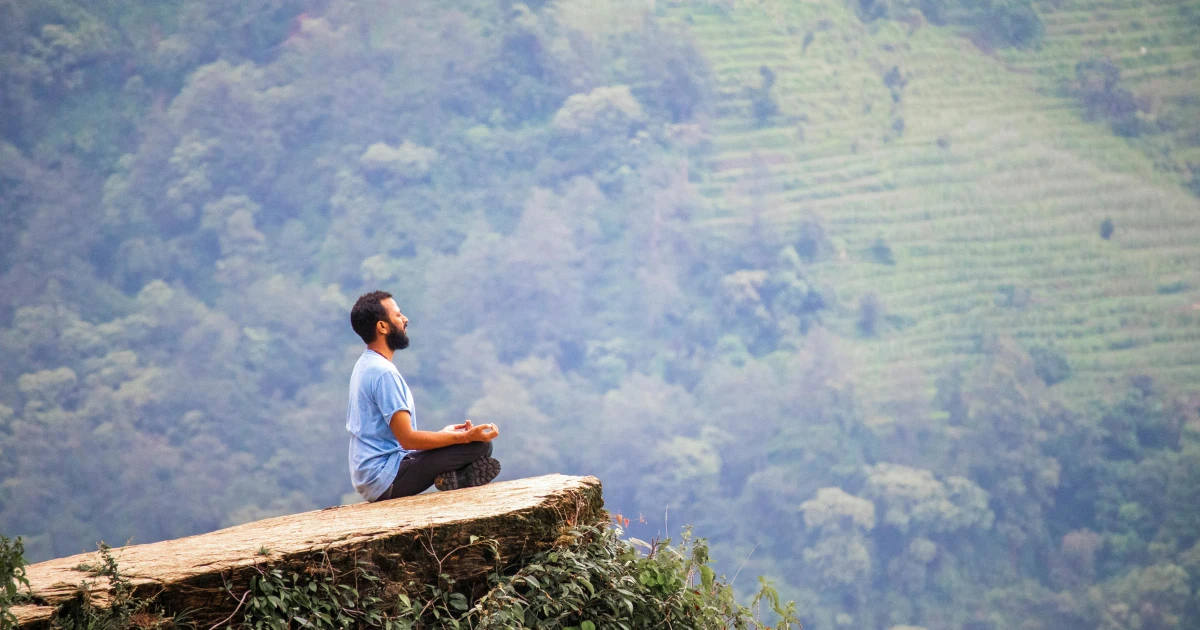
Trekking in the Himalayas is a moving meditation by default. You sync your breath with your steps. You focus entirely on the present moment because a misstep means a twisted ankle. But adding intentional asana and pranayama to a high-altitude trek? That elevates the experience from a physical challenge to a spiritual reset.
In 2026, the infrastructure for this has finally caught up. We now have teahouses with heated common rooms, guides who are certified in both wilderness first aid and Hatha yoga, and a permit system that keeps the crowds managed.
Here is the honest, no-fluff guide to yoga and meditation trekking in Nepal.
The Reality: Altitude might take its toll
Let’s manage expectations immediately. This is not Bali. This is not a heated studio in Boulder with bamboo flooring and essential oil diffusers. You will not be wearing just your Lululemon leggings to dinner because teahouse dining rooms are uninsulated, and you will freeze. You will not be drinking cold-pressed green juice unless you count the boiled spinach soup we order to help with iron levels.
Himalayan yoga is rugged. It is raw. It strips away the aesthetic layer of the practice and forces you to deal with the function.
The "Studio" Floor
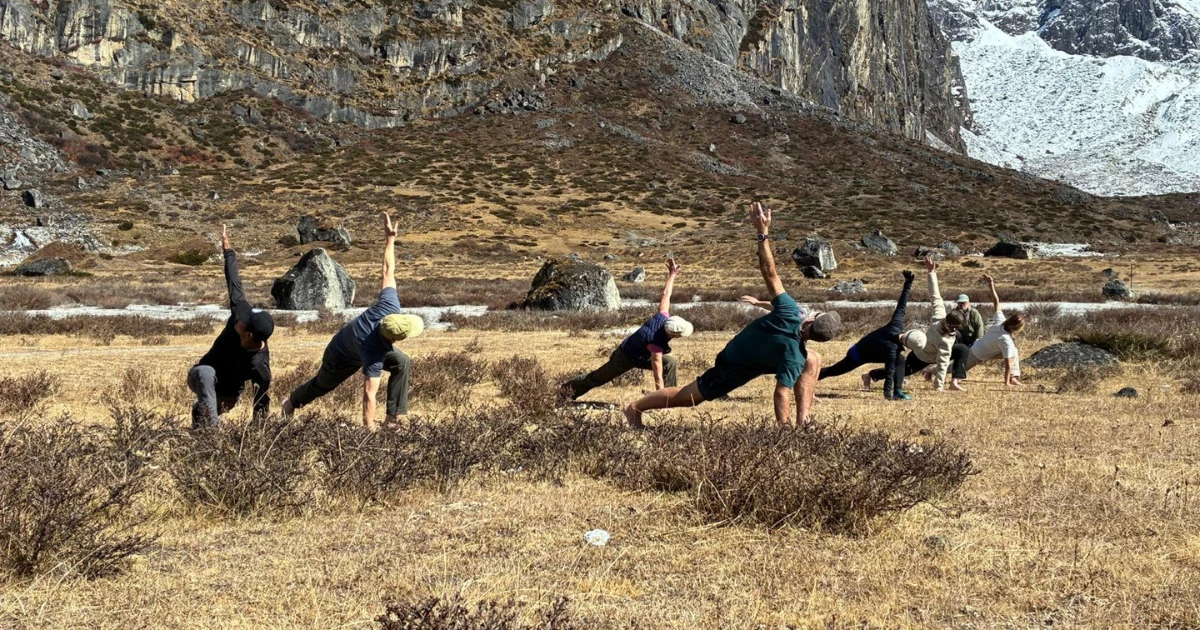
If you are expecting a flat surface, you are in the wrong mountain range. In the Himalayas, "flat" is a relative term. Your studio floor might be a patch of frost-covered grass outside a lodge in Dingboche. It might be the warped wooden deck of a teahouse in Ghorepani where every plank sits at a slightly different angle. It might be a stone courtyard shared with drying laundry.
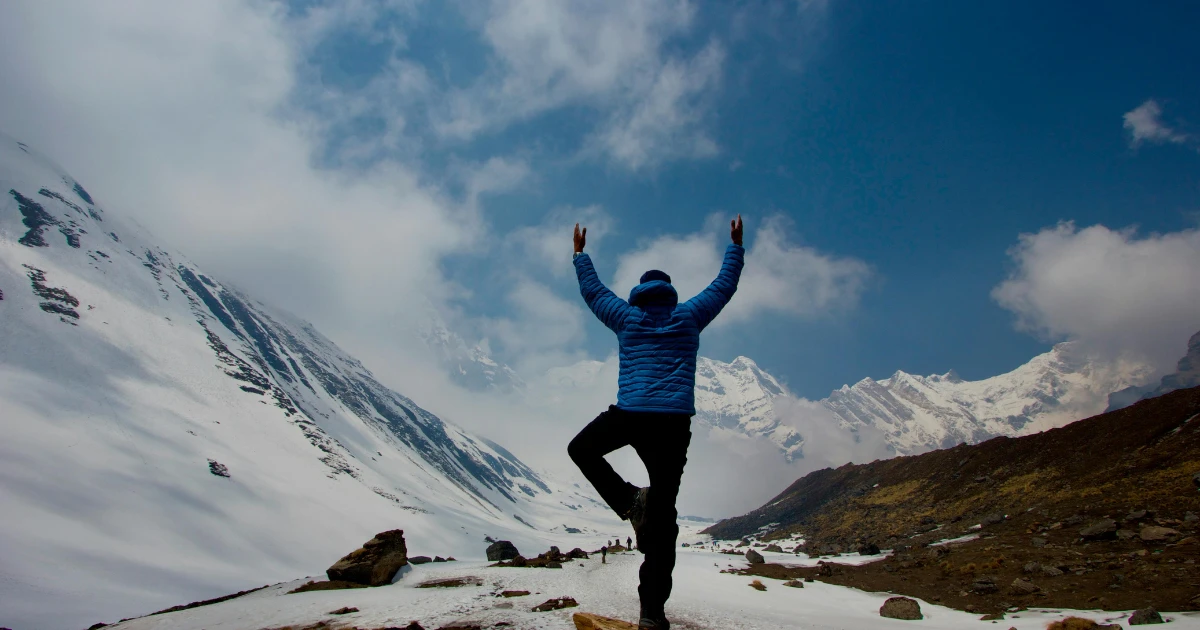
This uneven terrain is not an inconvenience; it is the teacher. When you try to hold Vrksasana (Tree Pose) on a slate path that tilts ten degrees to the left, your stabilising muscles have to wake up. You stop checking your alignment in a mirror, there are no mirrors, and you start listening to your ankles. You learn true proprioception because the ground demands it.
The Elements vs. Lycra
At 4,000 meters, the wind does not care about your brand-name activewear. The morning air bites. It finds the gaps in your layers. You might start your Surya Namaskar (Sun Salutations) wearing a beanie, a down jacket, and wool gloves. As you build internal heat, the down jacket comes off, but the beanie stays on.
There is no climate control here. You practice with the smell of juniper incense burning nearby or the faint scent of yak dung fuel from the kitchen. The sun is intense at this altitude; it warms your skin instantly while the air in the shade remains freezing. You learn to regulate your body temperature with breath and movement rather than a thermostat.
The Audience
Privacy is a luxury of the West. In the mountains, life happens in the open. When you roll out your travel mat, you become the morning entertainment. Local children might mimic your downward dog. Porters hauling 30kg loads might pause to watch you breathe. Yaks might wander through your peripheral vision, chewing cud with complete indifference to your warrior pose.
This lack of a "safe space" bubble is jarring at first. You feel exposed. But quickly, you realise that nobody judges your flexibility. To the locals, you are just another traveller stretching before a long walk. The self-consciousness evaporates. You learn to focus inward even when the world outside is chaotic.
The Shift
If you can breathe through the thin, cold air and find stability on a rocky ridge, your practice changes. It stops being about how the pose looks. It stops being a performance. It becomes entirely about what the pose does. Does it open your lungs for the ascent? Does it release the tension in your hips from yesterday's climb?
You stop performing yoga and start using it as a survival tool. That is the reality of the Himalayas. It is uncomfortable, it is messy, and it is the most honest practice you will ever have.
Top 3 Yoga & Meditation Itineraries for 2026
We have tested dozens of routes to find the perfect synergy between physical exertion and spiritual stillness. In 2026, these three itineraries represent the gold standard for yoga and meditation trekking in Nepal, offering the best balance of quiet trails, accessible terrain, and high-vibrational energy.
1. Mardi Himal Yoga Trek
- Duration: 7 Days
- Max Altitude: 4,500m (Mardi Himal Base Camp)
- Vibe: Silence, isolation, and 360-degree ridge-line views.
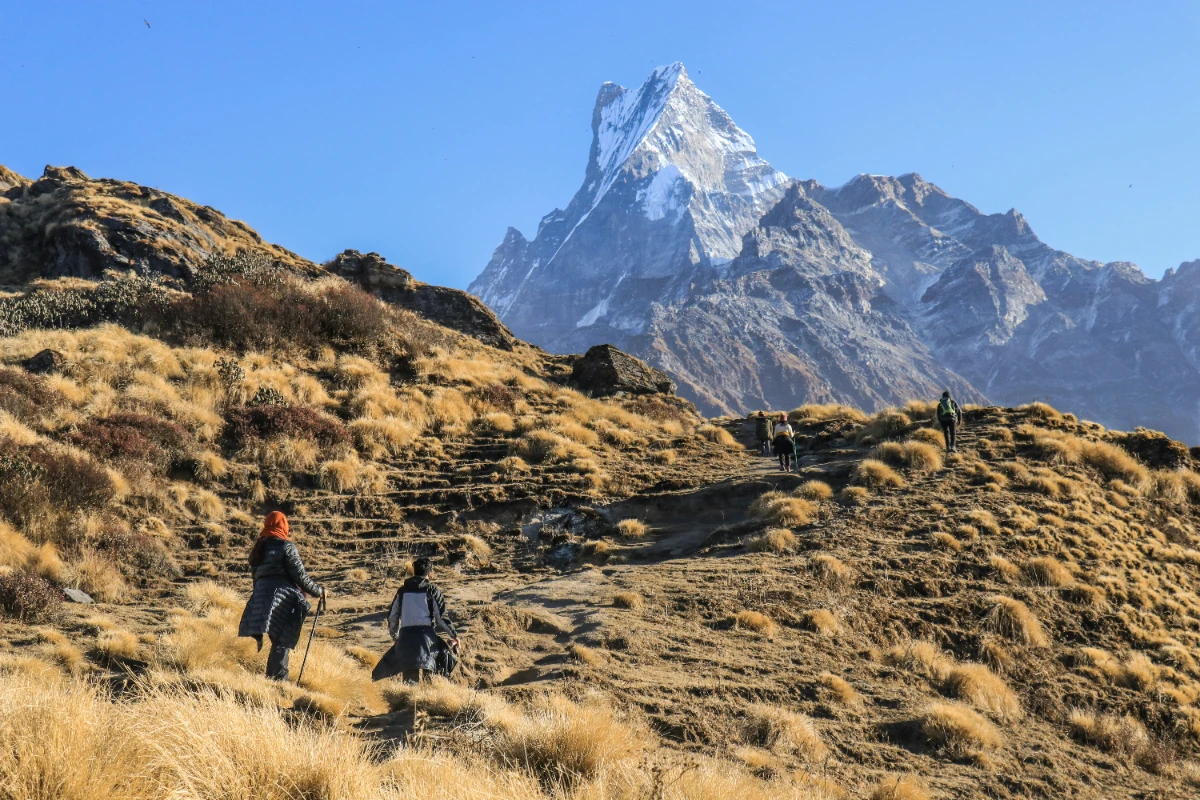
The Mardi Himal Trek is our top recommendation for 2026. Unlike the heavily trafficked Annapurna Base Camp route, Mardi Himal stays elevated on a narrow ridge for the duration of the journey. This unique geography means you are treated to dual-sided views of the Annapurna and Dhaulagiri ranges, with Himalayan sunrise yoga and sunset meditation sessions possible every single day.
The Yoga Highlights:
- Forest Camp (2,600m): We weave through ancient rhododendron and oak forests. The clearings here are cushioned by thick moss that naturally dampens sound, creating a "silent forest" effect perfect for afternoon restorative Hatha sessions.
- Badal Danda (3,200m): Literally translating to "Cloud Hill," this is where we practice above the weather. At sunset, the clouds often settle in the valley below, leaving the peaks of Hiunchuli and Annapurna South glowing in the "golden hour."
- High Camp (3,550m): This is our base for the final ascent. Morning sessions here are brisk and powerful. Because the temperature is low, we focus on Surya Namaskar (Sun Salutations) to build internal Agni (fire) while facing the vertical south face of Machhapuchhre (Fishtail).
2. Everest Base Camp (EBC) Spiritual Journey
- Duration: 14 Days
- Max Altitude: 5,545m (Kala Patthar)
- Vibe: High-altitude energy, deep Buddhist culture, and physical transcendence.
The Everest Base Camp Yoga Trek is a "Bucket List" item for a reason. While the trail is famous for its challenge, the Khumbu region is also a sacred landscape filled with monasteries and mani walls. The key to a successful spiritual journey here is our "Off-Peak" scheduling, where we find pockets of absolute stillness amidst the world’s highest peaks.
The Yoga Highlights:
- Namche Bazaar (3,440m): During our mandatory acclimatisation days, we hike to the ridge overlooking the Everest View Hotel. Practising Pranayama (breathwork) here is a lesson in mindfulness; the thin air requires absolute focus on the Ujjayi breath, helping your body adapt to the altitude.
- Tengboche Monastery (3,860m): We time our arrival to coincide with the afternoon monks' chanting. There is no experience quite like meditating inside this ancient monastery, surrounded by the smell of juniper and the low-frequency vibrations of Tibetan horns.
- Nagarjun Hill: Located above Dingboche, this is a secret spot for our groups. It’s a steep climb to a flat, wind-sheltered plateau that looks directly at the 8,000m giant Makalu. It is the ultimate spot for a "Zen at the Top of the World" photo and a deep, grounding meditation.
3. Langtang Valley: The Nature Immersion
- Duration: 8 Days
- Max Altitude: 3,870m (Kyanjin Gompa)
- Vibe: Deep valley protection, sound healing, and Tibetan-Tamang heritage.
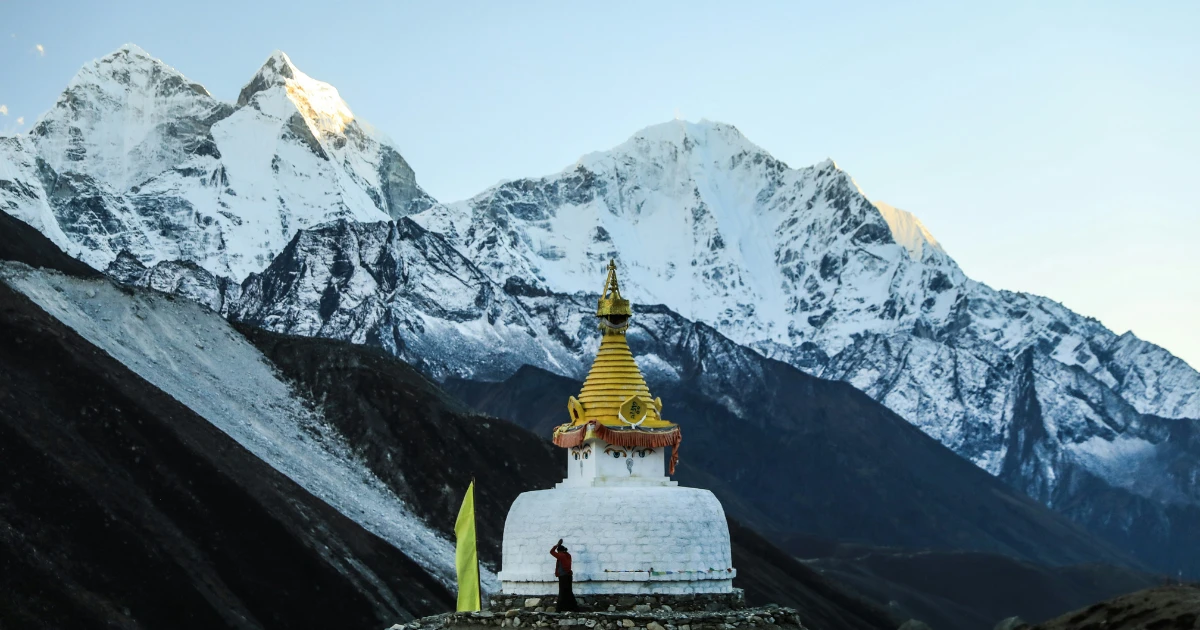
The Langtang Valley Trek offers a completely different energy. While the other routes are on ridges, Langtang is a "valley trek," meaning you are cradled by massive walls of rock and ice. This creates a "protected" feeling that is ideal for those looking for grounding and healing.
The Yoga Highlights:
- Lama Hotel to Langtang Village: This section follows the Langtang Khola River. We use the rhythm of the rushing water for Sound Meditation. The "white noise" of the glacial river naturally quiets the "monkey mind," making the day’s walk a moving meditation.
- Kyanjin Gompa (3,870m): This is the spiritual heart of the valley. We stay here for two nights to explore the local monastery and the famous yak cheese factory. Our morning yoga is held in the shadow of Langtang Lirung, where the glaciers literally hang over the village.
- Kyanjin Ri (4,773m): For those seeking a peak experience, we hike to this viewpoint for a summit meditation. Surrounded by 360-degree views of the Langtang Himalayas and the border of Tibet, it is a place where you can feel the true scale of the earth and your place within it.
A Typical Day on a Yoga Trek
At Hiking Nepal, we don’t force a rigid "boot camp" schedule. We understand that the mountains are unpredictable, and your energy levels will shift as the altitude increases. However, we follow a specific daily rhythm designed to optimise your physical recovery and mental clarity.
In 2026, our itineraries incorporate the latest sports science regarding high-altitude acclimatisation, blending ancient Vedic wisdom with modern physiological needs.
06:30 AM: Pranayama & Awakening (The Lung Primer)
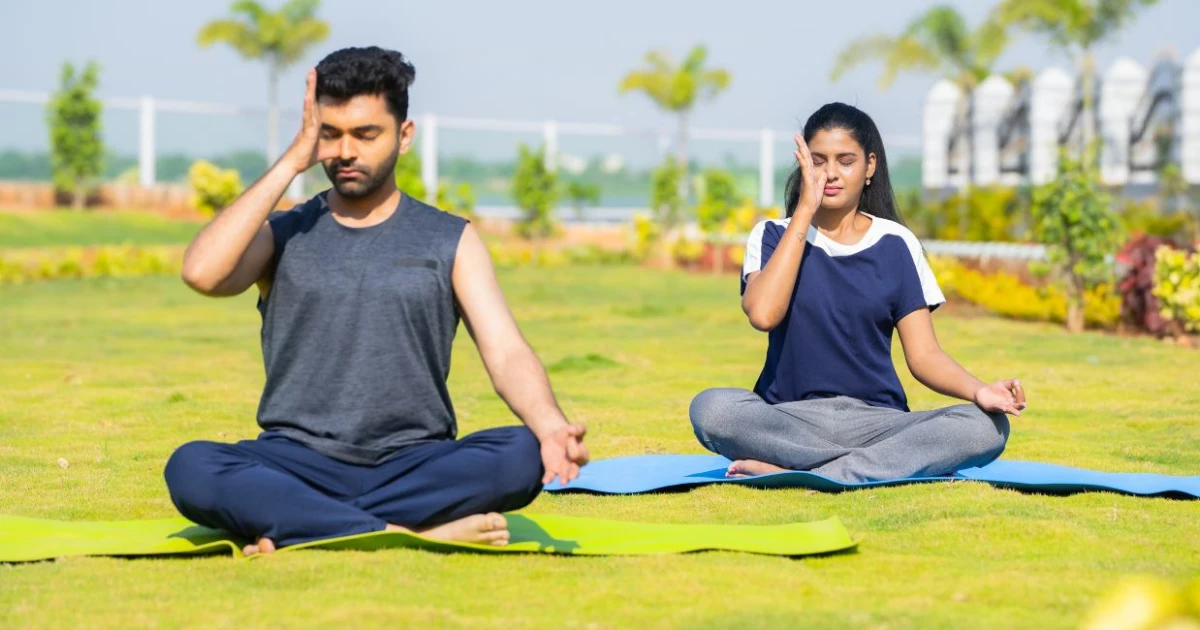
Before the sun hits the valley floor, we begin with 30 to 45 minutes of Pranayama (breathwork) and gentle joint mobilisation.
- The Focus: At high altitudes, the partial pressure of oxygen is lower, meaning your lungs have to work harder. We practice Kapalabhati (Skull Shining Breath) to clear the respiratory passages and Anulom Vilom (Alternate Nostril Breathing) to balance the nervous system.
- The Benefit: This session isn't about a workout; it’s about "awakening" the respiratory system and lubricating the joints (shoulders, hips, and ankles) before they take the brunt of the trail.
- The Ritual: We follow this immediately with hot ginger, lemon, and honey tea,a Himalayan staple that aids digestion and warms the core.
08:00 AM: Trekking as Moving Meditation (Mindful Stride)
Once we hit the trail, the yoga doesn't stop; it simply changes form. Our certified Nepal trekking guides act as mindfulness coaches, reminding you that the journey is the destination.
- The Technique: We teach a rhythmic breathing pattern, inhaling for two steps and exhaling for two steps. This "cadence breathing" ensures you don't over-exert yourself, keeping your heart rate in the aerobic zone, which is the #1 way to prevent Acute Mountain Sickness (AMS).
- Moving Meditation: We encourage periods of "Mauna" (silence) where you focus entirely on the sensation of your feet connecting with the earth. In 2026, when digital distractions are everywhere, these hours of silent walking are often the most profound part of the retreat.
04:00 PM: Post-Trek Restorative Asana (The Recovery)
We arrive at our teahouse by mid-afternoon, allowing plenty of time for the body to downshift before the evening chill sets in.
- The Studio: We roll out mats in the common room or on an outdoor terrace overlooking peaks like Annapurna South or Ama Dablam.
- The Focus: This is a purely restorative yoga session. We target the "Trekker’s Trifecta": tight hip flexors, fatigued hamstrings, and the lower back.
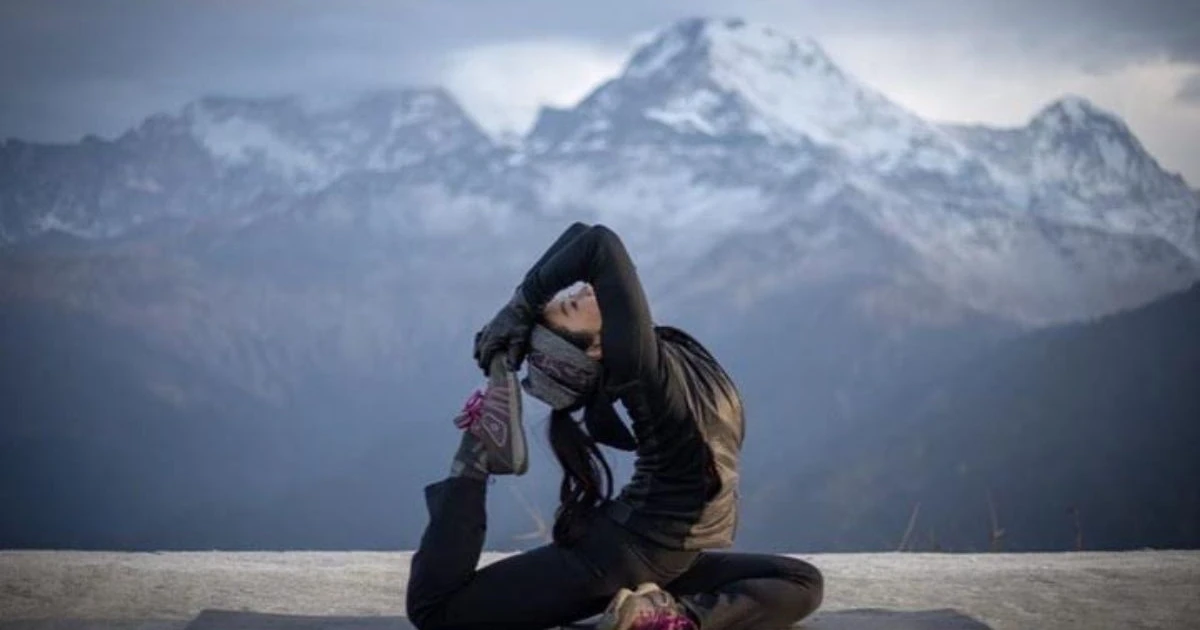
- Key Poses: We utilise deep Eka Pada Rajakapotasana (Pigeon Pose) to release the glutes and Uttanasana (Forward Fold) to lengthen the spine after a day of carrying a pack. This session flushes lactic acid from the muscles, ensuring you aren't "stiff as a board" the next morning.
08:00 PM: Yoga Nidra & Sound Meditation (Deep Sleep)
Sleep can be elusive at high altitudes due to the body’s increased metabolic rate. After a dinner of nutritious Dal Bhat, we gather for the final "mental wind-down."
- The Practice: We facilitate Yoga Nidra (Yogic Sleep), a guided meditation performed lying down. In 2026, we have also integrated Tibetan Singing Bowl therapy into our evening sessions.
- The Goal: Yoga Nidra effectively "tricks" the nervous system into a state of deep repair. It lowers cortisol levels and promotes a transition into REM sleep, which is essential for cellular recovery and altitude adaptation. You’ll head to your sleeping bag feeling grounded, quiet, and ready for tomorrow’s ascent.
The Gear: Packing like Yogi in the Wild
In the Himalayas, every gram counts. When you are trekking between teahouses at 4,000 meters, your gear needs to be multi-functional, lightweight, and resilient. Forget the bulky equipment of the city; in 2026, the "Zen Trekker" packs with surgical precision.
The 1.5mm Foldable Travel Mat
Leave your 5mm "pro" mat at home. It’s too heavy for a porter and too bulky to lash onto a daypack. For yoga trekking in Nepal, we recommend a 1.5mm ultra-light travel mat (like the Manduka eKO Superlite or Jade Voyager).
- The Benefit: These mats are made of natural, high-grip rubber but are thin enough to fold like a pair of jeans.
- Pro Tip: They fit perfectly inside your daypack, acting as a structured back-panel cushion while you hike.
Microfiber Yoga Towel (The Multi-Tool)
A high-density microfiber towel is your best friend on the trail. Teahouse floors and outdoor stone courtyards can be unforgiving on the joints.
- The Cushion: Lay this over your travel mat to provide extra padding for kneeling poses like Anjaneyasana (Low Lunge).
- The Hygiene Factor: Beyond yoga, it doubles as your quick-dry shower towel. In 2026, many teahouses offer hot showers, and a microfiber towel dries in half the time of cotton, preventing that "damp pack" smell.
The Merino Wool Layering System
In the mountains, Merino wool is non-negotiable. Whether you are practising in the early morning frost of Mardi Himal or the evening chill of Everest, you will likely be doing yoga in your base layers.
- Why Merino? It is naturally antimicrobial. You can wear the same leggings for four days of trekking and three sessions of yoga without them holding an odour.
- Thermal Regulation: It breathes when you're moving, but traps heat the moment you stop for a meditation session, preventing the dreaded "post-sweat chill."
Mala Beads: The Analogue Pace-Setter
While many trekkers in 2026 rely on smartwatches, a set of Mala beads is a superior tool for a spiritual trek.
- Walking Meditation: Use the beads to keep a consistent pace. One bead, one breath. It keeps you grounded during the steep "stairmaster" climbs of the Annapurna Conservation Area.
- Intentionality: They serve as a physical anchor for your daily Sankalpa (intention) as you move toward the peaks.
Insulated Down Booties
This is the ultimate "insider" tip for Hiking Nepal travellers. Most teahouses have unheated, stone or wooden floors that act like heat-sinks for your feet.
- The Meditation Essential: During evening Yoga Nidra or seated meditation, your circulation slows down. Standard socks won't cut it.
- The Comfort: A pair of ultralight down booties (like those from Feathered Friends or The North Face) is like sleeping bags for your feet. They weigh almost nothing but transform a cold dining hall into a cosy sanctuary for your practice.
2026 Logistics for Yoga Trek: What You Need to Know
The trekking landscape in Nepal has seen its biggest shift in decades. As of early 2026, the days of "winging it" are over. To ensure your spiritual journey doesn't hit a bureaucratic wall, here is the essential administrative breakdown for the current season.
1. The "Yogi-Guide" Requirement
Under the Mandatory Guide Regulation of 2026, foreign trekkers are no longer permitted to hike solo in Nepal’s National Parks or Conservation Areas (including the Annapurna, Everest, and Langtang regions). This law was designed to eliminate the high number of "missing trekker" cases and to ensure every visitor has professional medical support on hand.
At Hiking Nepal, we’ve taken this a step further. We don’t just provide a guide; we provide a dual-certified mentor.
- The Credentials: Every one of our leaders holds an official NATHM (Nepal Academy of Tourism and Hotel Management) trekking license and has completed a 200-hour Yoga Teacher Training (YTT).
- The Benefit: Most trekking guides are trained to keep you moving at a set pace. Our guides understand that a "successful" day might mean stopping for an hour on a ridge to practice Pranayama because the energy is right—not just because you're out of breath.
2. The Blue e-TIMS Permit (Your Digital Safety Net)
In 2026, the old paper TIMS cards will be replaced by the Blue e-TIMS system. This is a fully digital, QR-coded permit that is mandatory for all guided groups.
- How it works: We handle the entire application process through the government portal before you arrive.
- Real-Time Safety: Your e-TIMS is linked to our agency dashboard and local checkpoint scanners. If a sudden blizzard or earthquake occurs, authorities can instantly see which specific trail segment you are on, allowing for immediate and precise rescue coordination.
- Insurance Integration: The system now requires proof of "Himalayan Grade" insurance (covering up to 6,000m) to be uploaded before the permit is issued. We’ll double-check your policy to ensure it meets these 2026 standards.
3. Digital Detox vs. Connectivity
Connectivity in the Himalayas has reached a tipping point. With high-speed satellite internet now common in villages like Namche Bazaar and the Annapurna foothills, the temptation to stay "plugged in" is higher than ever.
- The Reality: While you could live-stream your meditation from a 4,000m ridge, we strongly advise against it. This trip will be focused on finding inner peace, so our recommendation is to go off the grid for a while if possible.
- Our "Aeroplane Mode" Policy: We encourage our guests to keep their phones off or on aeroplane mode from the moment we leave the teahouse until we return in the afternoon.
- The Why: A yoga retreat is about internalising your awareness. Constant notifications fragment your focus and pull you out of the "flow state" that the mountains naturally provide. Use your device for photos, but let the digital world wait until you're back at the lodge.
Looking for a Yoga trek in Nepal?
The mountains have a way of stripping away the ego. You cannot pretend to be strong when you are gasping for air at 5,000 meters. You have to be humble. You have to be present. You have to listen to the rhythm of your heart and the whistle of the wind through the prayer flags.
That is the true yoga. The poses we do on the mat are just a warm-up for the mental endurance required to live at the edge of the world. In the Himalayas, we don't just "do" yoga; we live it with every step, every breath, and every moment of silence.
At Hiking Nepal, we don't just see ourselves as guides; we are your partners in this transformation. Whether you are finding your center on the quiet ridges of Mardi Himal, absorbing the ancient spiritual vibrations of the Khumbu, or grounding yourself in the deep sanctuary of the Langtang Valley, we are here to ensure your journey is safe, authentic, and deeply personal.